Last updated November 25, 2026







Free written scope consultation - allowances, timeline, and change-order rules on paper before a single trade is scheduled
Construction Emergency Preparedness Guide for Folsom Homes
Most homeowners treat construction emergencies as something that happens to other people, in other towns. The truth is harder: the emergencies that hit Folsom homes are predictable. They arrive with a hard freeze, a foothill wind storm, or a wildfire smoke event, and they always find the households that never located the main water shut-off or wrote down which grout color runs through the kitchen floor.
Preparedness isn’t pessimism. It’s the same discipline you’d apply to choosing a countertop: know the material, know the source, know how it behaves. In this guide we’ll walk through the shut-offs every Folsom home should map, the finish documentation that turns a repair into a match instead of a guess, the wildfire steps that matter in this town’s higher-risk zones, and the four-hour window after water intrusion that decides how much of your home survives intact.
Quick Answer
Construction emergency preparedness for a Folsom home means three things done before anything goes wrong: knowing and labeling your main water, gas, and electrical shut-offs; photographing and documenting every finish material in the house (tile name, grout color code, paint formula, cabinet brand line); and having a vetted remodeling contractor relationship already in place. Homes with that groundwork recover from burst pipes, wind damage, and smoke infiltration far faster than homes that start from zero at the worst possible moment.
Styles & brands we work with
- Kitchen remodeling
- Bathroom remodeling
- Home additions & ADU
- Roofing
- Windows & doors
- Driveway & pavers
- Fence
Table of Contents
- Where Are Your Shut-Offs? The Folsom Home Map
- How to Build a Finish Specification Record
- The First Four Hours After Water Intrusion
- Wildfire Preparedness in Folsom’s Higher-Risk Zones
- How to Vet an Emergency Contractor in Under Two Minutes
- Why Folsom’s Climate Drives Its Construction Emergencies
- Documenting for Insurance Before You Need To
- Turning an Emergency Repair Into a Planned Remodel
Where Are Your Shut-Offs? The Folsom Home Map
Every adult in the household should be able to shut off water, gas, and electricity in the dark, in under sixty seconds, without a flashlight app. That’s the standard. Most homes in Folsom fail it on the first try. The fix is a one-page map taped inside a kitchen cabinet and photographed onto every phone in the house.
Start with the main water shut-off. In most single-family homes here it sits near the meter at the street or at the point where the line enters the house. Turn the valve and confirm the kitchen faucet runs dry. If the valve is stiff or seized, that’s a maintenance item to resolve now, not during a burst-pipe event. Gate valves that won’t close are common in older Folsom housing stock, and a valve that doesn’t turn is the same as no valve at all.
The gas shut-off is usually a quarter-turn valve on the supply line near the meter. Know where it is, and know that only the utility restores gas service once it’s off. The electrical panel needs its own note: label every breaker clearly, and if a breaker trips that you can’t explain, that’s a call, not a reset-and-forget.
Build the map in this order:
- Locate the main water shut-off and test it. Photograph the open and closed positions.
- Locate the gas meter valve and mark it with a tag.
- Photograph the electrical panel with the door open and every breaker labeled.
- Note any secondary shut-offs under sinks, behind toilets, and at the water heater.
- Print the page and tape it inside the cabinet nearest the kitchen sink.
- Text the same photos to every household member so it lives on their phones.
Ten minutes of work. It’s the difference between a wet floor and a flooded kitchen with damaged cabinetry.
How to Build a Finish Specification Record
Here’s the part almost no one does, and it’s the part that saves the most money: a finish specification record. When a supply line fails and soaks a bathroom wall, or smoke drifts in and settles into fresh paint, the repair only looks invisible if the contractor can source the exact same materials. Matching a floor tile by eye is guesswork. Matching it from a record is a purchase order.
Every finish in your home has an identity. The tile has a brand, a color name, and usually a size and finish. The grout has a manufacturer and a color code. The paint has a brand, a color name, and a formula tinted at the store. The cabinetry has a door style and finish, and in most homes here that means a named line rather than a generic “white shaker.” The countertop is a slab or a quartz line with a specific name. Fixtures have model numbers stamped on them or printed on a sticker underneath.
Build the record room by room:
- Photograph each wall and floor finish in natural light, plus a close-up of the texture.
- Keep the tile box label, the grout bag label, and the paint can label photo together in one folder.
- Record the cabinet brand line and door style. If you have KraftMaid or Wellborn cabinetry, the spec sheet from the original install is worth keeping.
- Note the surface material by name: a Cambria quartz, a Silestone, or a Caesarstone has its own color name and a matching edge profile.
- Photograph the plumbing fixtures with the model stickers visible. Moen and Delta faucets carry model numbers that make replacement exact rather than approximate.
Store the photos in a shared cloud folder, and email a copy to yourself. A record that lives only on a phone that gets dropped in the water is a record you don’t have. This is also the backbone of any insurance claim, covered below.
The First Four Hours After Water Intrusion
Water damage compounds on a schedule. The first hour is about stopping the source. The next three are about removing standing water, pulling anything that’s holding moisture against a finish, and getting air moving. Do those in order and you can often save flooring, drywall, and cabinetry that would otherwise be torn out. Do them out of order and you’re paying for a renovation you didn’t plan.
The sequence matters more than the effort:
- Stop the source. Main water shut-off first, then the local valve if you can reach it. Gas and power only if the water is near an electrical panel or a gas appliance, in which case leave the area and call for help.
- Kill the power to the affected area. Water and live circuits don’t mix. If a ceiling or wall is holding water near wiring, shut the circuit at the panel and don’t touch the wet surface.
- Document before you move anything. Photograph and video the water line on walls, the soaked flooring, and every affected finish. This is your claim record. Move nothing until it’s captured.
- Remove standing water. Towels, a wet/dry vacuum, a mop. Get it off the floor fast, especially over hardwood and laminate, which cup and swell within hours.
- Pull up wet rugs, furniture legs, and anything sitting on the finish. Trapped moisture under a rug ruins finish faster than open air.
- Get air moving. Fans and open windows if the outdoor air is dry. In a Folsom summer the outside air is a drying asset; in a cold snap, use indoor air movement and heat.
- Call a professional the same day. Cabinets swell at the toe kick first. Drywall wicks water up past where it looks wet. A trained eye reads the moisture map before it becomes a mold problem.
If the water reached cabinetry, flooring seams, or the base of a wall, get someone out to assess it before you assume it dried out on its own. Hidden moisture is the part that turns a repair into a rebuild.
Wildfire Preparedness in Folsom’s Higher-Risk Zones
Folsom includes areas classified in California’s higher fire hazard severity zones, including Tier 2 and Tier 3 designations, and homes in those zones are judged by different standards than homes in the flat center of town. The threat in a wildfire event usually isn’t a wall of flame arriving at the door. It’s embers, which can travel ahead of a fire front and land in gutters, on wood decks, and against exterior walls, then smolder for hours.
Exterior material choices are part of the defense. So is the way those materials are installed. When we work on exteriors, we spec and install assemblies that close the gaps embers exploit: the junction between siding and roofline, the space behind a fascia, the exposed soffit. James Hardie siding and trim systems are among the most durability-tested cladding systems in residential construction, and a full-scope exterior refresh built around them performs better in ember exposure conditions than a patchwork of mixed materials with unsealed joints.
The practical steps for a Folsom home:
- Clear gutters and roof valleys before fire season. Embers collect in debris.
- Screen attic vents, foundation vents, and soffit vents with fine mesh.
- Remove combustible material from the first five feet of the foundation.
- Repair or replace wood shake, rotted trim, and gaps in siding that let embers in.
- When you’re repainting or replacing exterior surfaces, do it as a coordinated exterior scope, not piecemeal cosmetic fixes.
If your home is in one of the higher-risk zones, our home remodeling work on exteriors is where this gets addressed as part of a plan rather than at the last minute.
How to Vet an Emergency Contractor in Under Two Minutes
After a real loss, contractors appear quickly. Some are legitimate and booked solid. Some are predators who target homeowners in the worst week of their year. The single most useful tool you have is a public database, and it takes less than two minutes to check: the Contractors State License Board lookup, often called CSLB.
Here’s the two-minute check:
- Pull up the CSLB website on your phone and search the contractor’s license number.
- Confirm the license is active, not expired or suspended.
- Confirm the classification matches the work. A general building license and a specialty license cover different scopes.
- Look at the complaint history and any disciplinary action noted.
- Ask for the license number in writing and compare it to the one on the estimate. If the number on the contract doesn’t match the one in the database, walk away.
Beyond CSLB, a few red flags should end the conversation immediately: a request for a large cash deposit before any work begins, pressure to sign a contract the same day, an out-of-state phone number with no local presence, and a quote that’s dramatically lower than every other bid. Predatory operators price high after a disaster, but they also price low up front and add change orders once the work is torn open. Neither is a deal.
This is why we tell Folsom homeowners to establish a contractor relationship before the emergency. When you already know who’s doing your kitchen remodeling or your interior painting, the post-disaster scramble becomes a phone call instead of a high-anxiety search.
Why Folsom’s Climate Drives Its Construction Emergencies
Folsom’s weather pattern sets up a specific set of failure modes. The winters are mild overall, but a cold snap can still deliver a hard freeze that catches exposed plumbing off guard, especially in garages, exterior walls, and hose bibs that weren’t winterized. The January 2024 freeze event sent a wave of calls across the region from homeowners who didn’t know where their main water shut-off was until after a pipe had let go. The damage that follows a burst pipe isn’t a plumbing problem by then. It’s a floor, drywall, and cabinet problem.
The foothill wind storms that roll through are the other recurring event. Wind-driven rain can drive water into siding gaps, roof penetrations, and window perimeters. Trees and branches come down, and the damage often starts as a small leak that isn’t found for weeks. Then there’s wildfire season, when smoke and ash infiltration becomes its own construction issue. Ash settles into vents and HVAC returns, and smoke residue clings to interior paint and soft finishes. A home that needs interior repainting and vent cleaning after a smoke event is doing construction remediation, not routine maintenance.
What all three share: they’re predictable in type and unpredictable in timing. The homeowner who has a shut-off map, a finish record, and a contractor relationship handles all three with far less disruption. That’s the whole case for doing the groundwork during the calm months.
Documenting for Insurance Before You Need To
Insurance claims go better when the adjuster can see what was there before the loss, and go worse when a homeowner has to reconstruct their finishes from memory. The finish specification record from earlier is your claim backbone. Build it against the categories an adjuster actually needs: room by room, with photographs and material names.
The claim package that works:
- Room-by-room photographs of every finish, dated.
- Product labels: tile boxes, grout bags, paint can labels, cabinet spec sheets.
- A list of plumbing fixtures by brand and model. American Standard and Moen carry model numbers that make replacement clean.
- Receipts or invoices from the original installation where you have them.
- The shut-off map and a short written description of the loss when it happens.
When a loss occurs, document the damage before cleanup if it’s safe to do so, and keep the damaged materials until the adjuster has seen them. Save every receipt for emergency mitigation. And when the repair quote comes together, make sure it specifies the actual materials by name, not a generic “like-kind replacement.” A quote that says Cambria quartz is different from a quote that says “quartz countertop.”
Turning an Emergency Repair Into a Planned Remodel
An emergency repair and a planned remodel want the same underlying things: accurate materials, a coordinated scope, and one point of contact. That’s the reason we encourage Folsom homeowners to think of a water or smoke event as a chance to plan rather than just patch. A burst pipe under a kitchen sink that ruins the base cabinets and part of the floor is an opportunity to choose cabinetry by name (KraftMaid or Wellborn, for instance) and a surface that matches the rest of the home, rather than replacing builder-grade with builder-grade.
The same holds after a wildfire smoke event that forces interior repainting. If the walls are getting done anyway, coordinating paint with flooring and cabinetry in one scope avoids the retrofit-after-the-fact problem where a floor is laid and then a cabinet is cut to fit around it. One contractor, every finish, planned together. That’s how a bathroom remodeling project or a flooring replacement after a loss ends up looking deliberate rather than improvised.
Our technicians have up to 11 years of experience coordinating multi-trade scopes, and our material bench runs from Kahler and Grohe fixtures to Blanco sinks and Delta or Moen faucets, so the finish you pick at the showroom is the finish that gets installed. The written estimate sets the final price, and the estimate is free.
Common Mistakes to Avoid
- Not testing the main water shut-off. A valve that won’t turn is the same as no valve. Test it and fix it before you need it, because a seized gate valve in a Folsom home is a slow, expensive discovery.
- Skipping the finish record. Homeowners who record tile brand, grout color code, and paint formula avoid the guess-and-match cycle that turns a small repair into a mismatched patch.
- Cleaning up before documenting. Once wet flooring is pulled and wet drywall is cut out, the claim evidence is gone. Photograph first, then mitigate.
- Hiring the first contractor who knocks. Post-disaster pricing attracts opportunists. Check the CSLB license before you sign anything, every time.
- Ignoring smoke and ash after a fire season. Smoke residue settles into vents, HVAC returns, and interior paint. Leaving it is a slow degradation, not a cosmetic issue.
- Settling for like-kind replacement. Replacing a damaged surface with a generic material when you could spec a named one (Silestone, Caesarstone, Cambria) leaves value on the table.
- Treating each trade as a separate emergency. Hiring a plumber, then a drywaller, then a floor layer, then a painter in a crisis produces scheduling gaps and finger-pointing. One contractor, every finish.
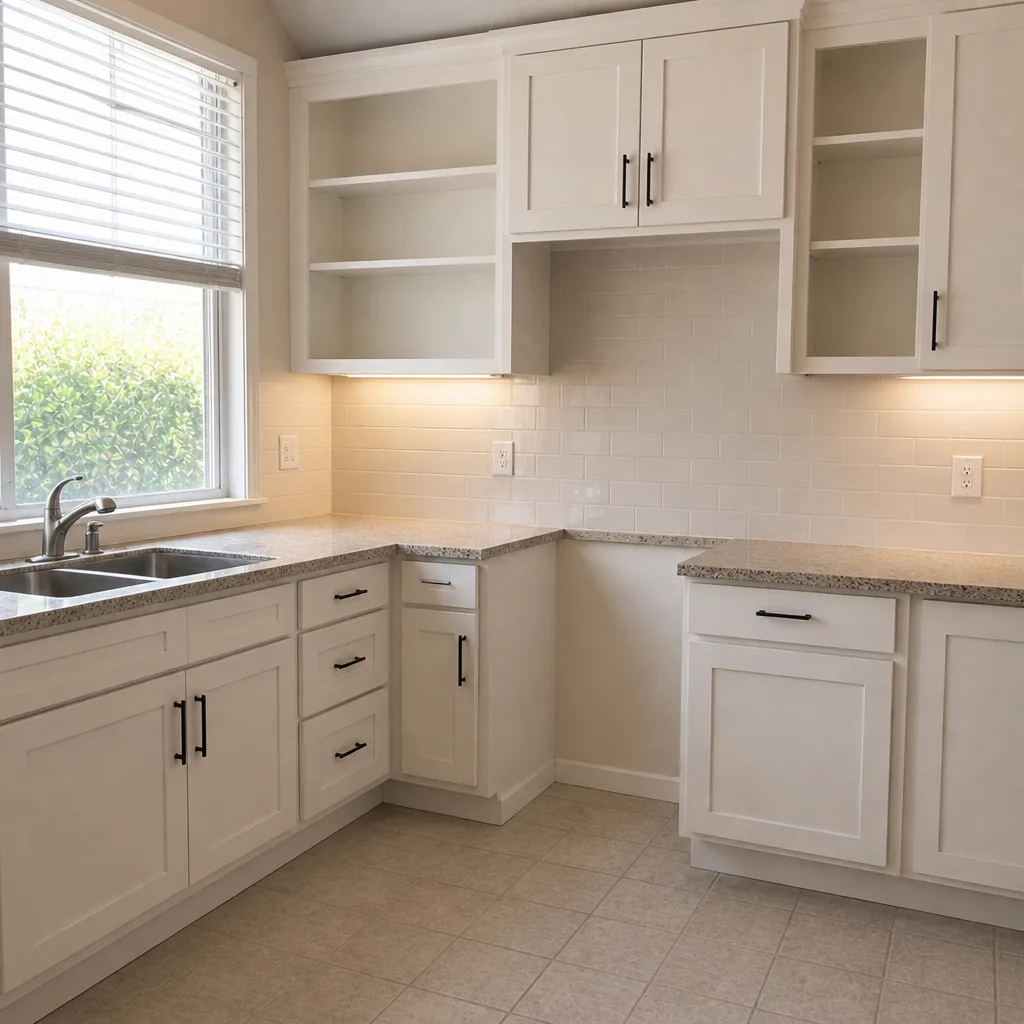
See the difference
 Before
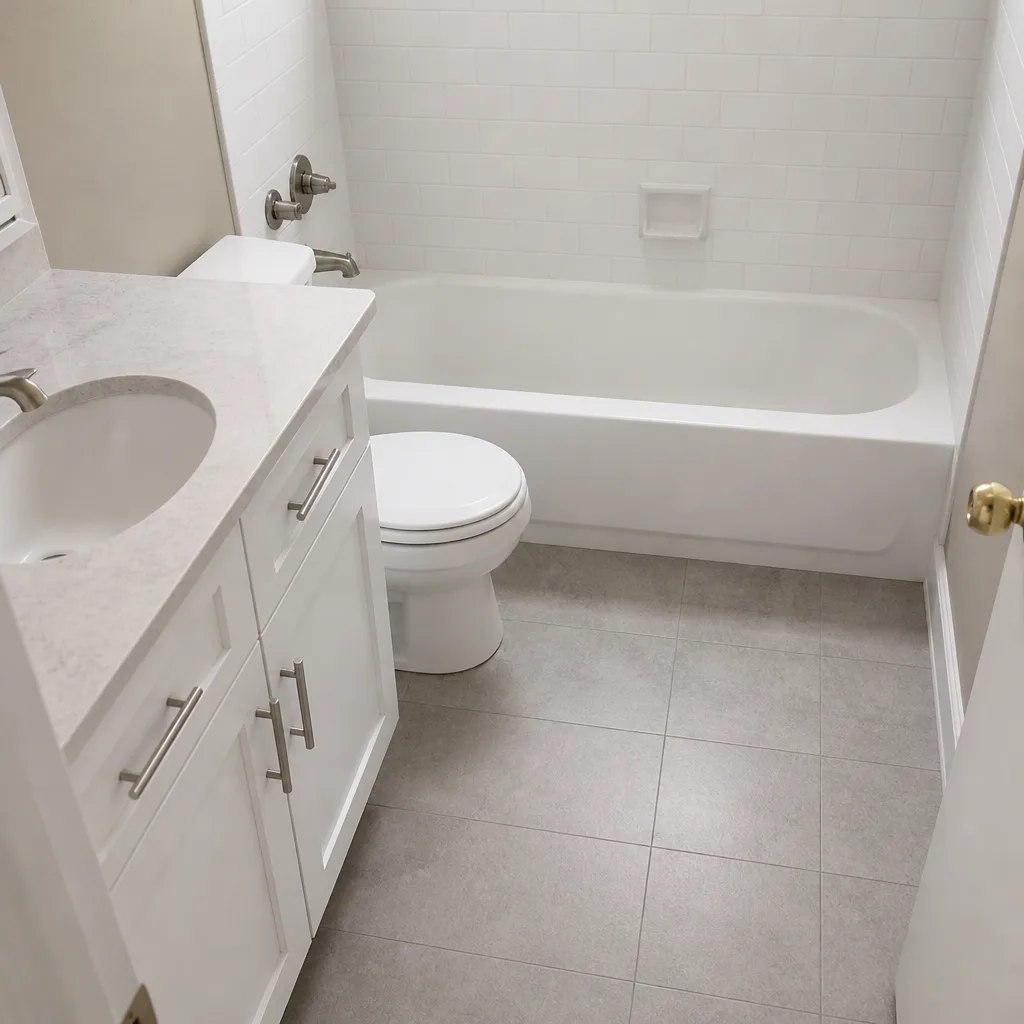 After
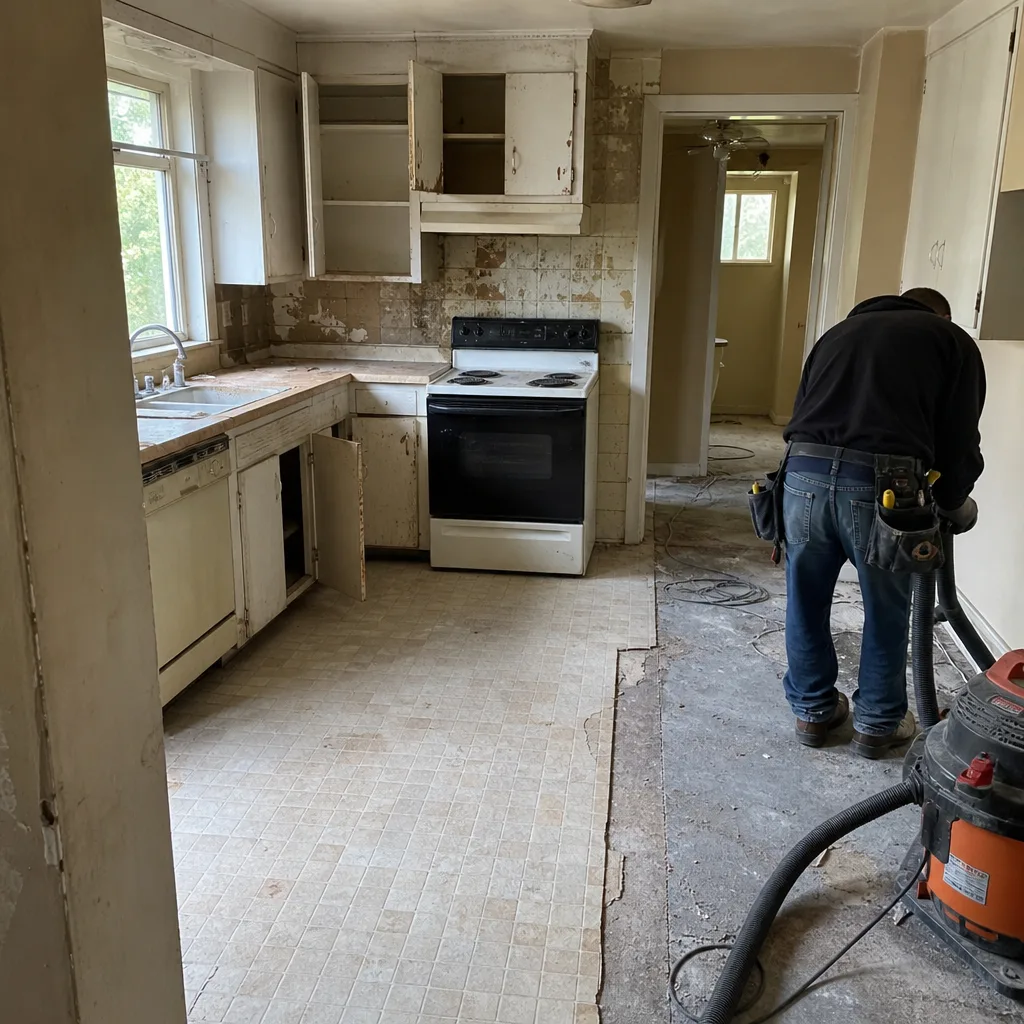 Before
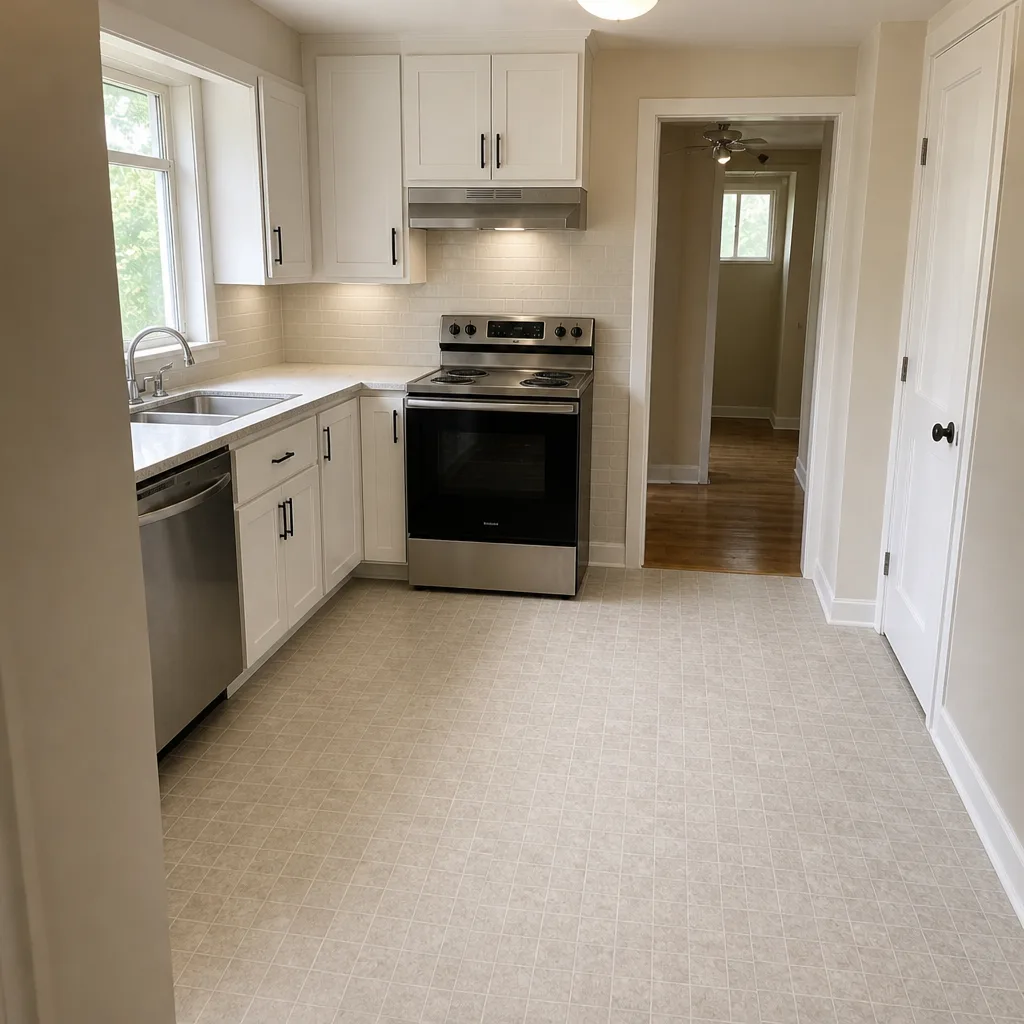 After
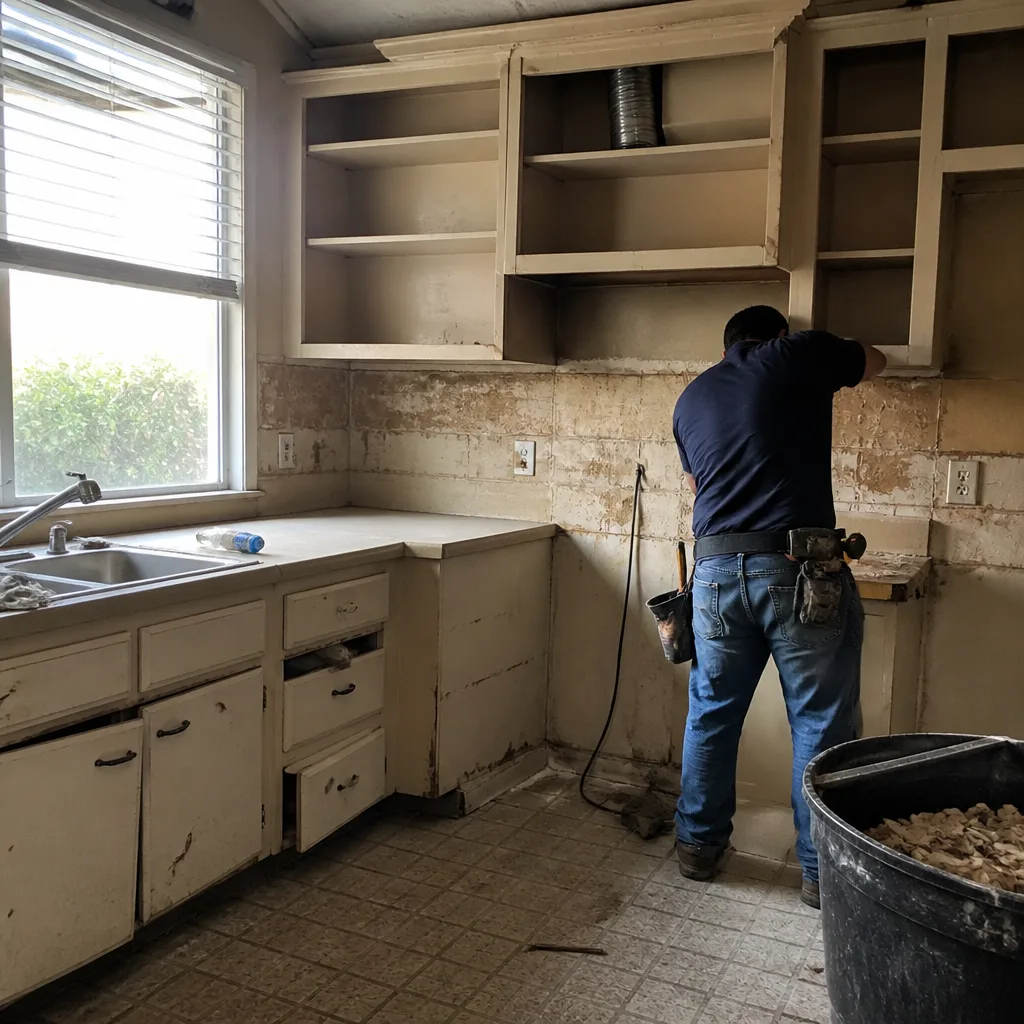 Before
 After
When to Call a Professional
Call a professional the same day when water has reached flooring seams, cabinetry bases, or the bottom of a wall, because hidden moisture becomes a mold problem within days. Call when smoke or ash has infiltrated the home after a wildfire event and you can smell it indoors. Call when wind damage has opened siding, soffit, or a window perimeter, even if it looks minor. Call any time gas is involved, a breaker won’t stay reset, or water is near an electrical panel.
Remodeling Folsom offers free estimates in Folsom, and our team can assess damage, scope the repair, and plan a coordinated finish. Call (279) 321-0076. We answer 24/7. Fast dispatch from 7am to 7pm, Sunday through Friday.
Frequently Asked Questions

It’s usually near the water meter at the street or where the supply line enters the house, but the exact spot varies by home and by neighborhood. Find it, test that the valve closes fully, and photograph it. If the valve is stiff or won’t turn, get it replaced before it matters. Call (279) 321-0076 for a free estimate on any remediation or repair that follows a water loss.
Within hours for hardwood and laminate, which cup and swell quickly, and within a day or two for drywall and the bases of cabinets, where hidden moisture feeds mold. The first four hours after intrusion decide how much of your flooring and cabinetry can be saved. Don’t assume it dried on its own if water reached seams or the base of a wall.
Yes, if your home is in one of the higher fire hazard severity zones, including Tier 2 and Tier 3 designations. The main threat in a fire event is ember intrusion, not a wall of flame. Screened vents, cleared gutters, and exterior materials installed with sealed junctions make a real difference. If you’re planning an exterior refresh, coordinate it as one scope.
Look up the license number on the Contractors State License Board (CSLB) website. Confirm the license is active, the classification matches the work, and check the complaint history. It takes under two minutes and should be done before you sign anything. If the license number on the contract doesn’t match the database, walk away.
Yes, if you’ve kept the tile brand, grout color code, paint formula, cabinet brand line, and countertop color name on record. Matching by eye is a guess; matching from a spec is exact. If you don’t have records, a professional can often identify materials from a photograph, but the certainty drops. Call (279) 321-0076 for a free estimate on matching repairs.
Most structural, plumbing, and electrical repairs do require a permit, so ask your city’s building department. The contractor you hire should be pulling the permits and passing the inspections, not leaving that to you. A written estimate that names the permit scope protects you. Call (279) 321-0076 for a free estimate and a clear permit scope.
The Bottom Line
Preparedness for a Folsom home comes down to three habits: a labeled shut-off map with a valve you’ve actually tested, a finish specification record that names the tile, grout, paint, cabinetry, and fixtures by brand, and a vetted contractor relationship established before you need it. Layer in the first-four-hours water sequence and a couple of wildfire exterior measures, and you’ve covered the failure modes this town actually produces. None of it is dramatic. All of it pays back the first time something goes wrong. Remodeling Folsom brings named, spec-grade materials to every scope, from a single repaired counter to a whole-home refresh, one contractor and every finish. Call (279) 321-0076 for a free estimate. We answer 24/7. Fast dispatch from 7am to 7pm, Sunday through Friday.
For more on our full scope, start with Remodeling Folsom, and reach out when you’re ready to plan rather than react.
Written by the team at Remodeling Folsom.