Last updated November 25, 2026








Free written scope consultation - allowances, timeline, and change-order rules on paper before a single trade is scheduled
Home Remodeling Troubleshooting in Folsom: Common Problems and How to Fix Them
The grout cracking in your new tile floor probably has nothing to do with the grout. It’s a substrate deflection problem that was baked in before the first tile was set, and no amount of regrouting will cure it. The same pattern repeats across Folsom remodels: problems that look like material failure turn out to be specification failures, and problems that look like installer error turn out to be an acclimation issue nobody planned for. This guide is about diagnosing the root cause instead of chasing the symptom. You’ll learn the five callbacks we hear about most in Folsom, how to tell cosmetic defects from structural installation failures, what California contractor warranty law actually obligates a contractor to remedy, and how to document a problem so a conversation stays productive.
Quick Answer
Most home remodeling problems in Folsom trace back to three root causes: substrate and framing defects hidden before finish materials went down, materials installed without proper acclimation to Folsom’s dry summer air, and specification choices that ignored how a material behaves in this climate. Cosmetic defects such as grout discoloration or cabinet door drift are usually adjustable or refinishable. Structural installation failures such as tile lippage over a moving substrate, or paint peeling in sheets from stucco, generally require the contractor to return and correct the underlying condition. Diagnose the cause first, document it with photos and dates, and check whether the failure point falls in the material warranty or the labor scope.
Styles & brands we work with
- Kitchen remodeling
- Bathroom remodeling
- Home additions & ADU
- Roofing
- Windows & doors
- Driveway & pavers
- Fence
Table of Contents
- How Do You Tell a Cosmetic Defect From a Structural Installation Failure?
- The Five Most Common Remodel Callbacks in Folsom
- How to Document a Problem Before You Call the Contractor
- Material Warranty or Labor Defect? Read the Failure Point
- Why Hardwood and LVP Gap in Folsom’s Dry Summers
- What California Contractor Warranty Law Requires of Your Remodeler
- Paint Adhesion on Folsom Stucco: Cause and Cure
- When to Call a Professional
How Do You Tell a Cosmetic Defect From a Structural Installation Failure?
Cosmetic defects affect only the surface and can be corrected without touching what’s underneath. Structural installation failures involve the substrate, framing, bonding or waterproofing, and resurfacing over them guarantees the problem returns. The dividing line is almost always whether the defect is stable or moving.
Here’s the practical test we walk homeowners through when they call about a finish problem in Folsom.
- Watch it for two weeks. A hairline crack that appears once and stays put is cosmetic. A crack that widens, or a tile edge that lifts further each month, is movement underneath.
- Tap the surface. A hollow sound under tile or a soft spot under vinyl plank means the bond has released. That’s a substrate problem.
- Check the joints. If grout or caulk is cracking in a straight line along a substrate seam or floor transition, the assembly is deflecting, not the sealer failing.
- Look at the failure pattern. Failures that repeat in a grid across a floor point to an installation method. Failures clustered at one spot point to a localized substrate issue.
- Test adhesion. On painted surfaces, press tape firmly and lift. Paint that comes away in sheets means the bond between coating and substrate never formed.
Why does the distinction matter? Because it tells you what to ask for. A cosmetic defect gets a touch-up. A structural failure needs the assembly corrected before any finish is replaced, and a contractor who only offers a cosmetic fix is treating a symptom. In Folsom’s newer neighborhoods, where slab-on-grade construction is common, we see a lot of tile lippage that traces to flatness tolerances not being checked before setting, not to the tile itself. Once the cause is named, the repair conversation gets much shorter.
The Five Most Common Remodel Callbacks in Folsom
These five issues account for the majority of post-completion calls we field in Folsom. Each has a specific cause, and none of them is usually the material’s fault.
1. Tile lippage
Lippage is one tile edge sitting higher than its neighbor. The cause is almost never the tile. It’s either an out-of-flat substrate that wasn’t corrected with a self-leveling compound, or a setting method that didn’t use a leveling clip system on large-format tile. Large-format porcelain is unforgiving of substrate variation. If you can feel a lip underfoot, the fix is removal and reset, not grinding.
2. Cabinet door drift
Doors that no longer close evenly, or gaps at the top of a run that widen over months. On KraftMaid and Wellborn cabinetry, which we specify and install, drift usually traces to hinges out of adjustment or a cabinet box installed out of plumb on a wall that wasn’t checked first. Doors and hinges are adjustable, and most drift corrects with a screwdriver and a level. Persistent drift along a whole run means the boxes were racked during installation.
3. Paint adhesion failure on stucco
Paint peeling or blistering on Folsom’s stucco exteriors is a moisture and pH problem. Stucco needs to cure and dry before coating, and it needs the right primer. Coating over stucco that’s still releasing moisture traps that moisture under the film. The paint fails, the stucco gets blamed, and the real cause was the coating schedule.
4. Grout discoloration
Grout that turns patchy or dark in one area usually points to moisture wicking from beneath, not to the grout sealer. On shower floors it’s often a sign the pre-slope or waterproofing wasn’t built correctly. On floor tile it can be efflorescence from moisture moving through the slab. Sealing over it hides the color for a while and changes nothing else.
5. Floor squeaks
Squeaks in wood subfloors come from panel-to-joist movement, and they show up in Folsom homes where the subfloor was fastened without enough screws or adhesive. Squeaks under hardwood can also come from the flooring itself moving against the subfloor if the acclimation window was too short. From above, the two feel identical. From below, you can see which one it is.
Notice the pattern: in all five, the visible defect is downstream of an upstream decision. That’s the whole thesis of troubleshooting a remodel. Diagnose upstream.
How to Document a Problem Before You Call the Contractor
Documentation turns a frustrating call into a clear one. A contractor who receives dated photos, a written timeline, and a description of what the surface is doing has everything needed to schedule the right technician with the right materials. A contractor who receives “the floor is wrong” has to start from zero, which costs you time.
What matters, and what doesn’t:
- What matters: a photo with a tape measure or a coin in frame for scale, the date the problem first appeared, whether it has changed since, the room and location, and the original installation date. Write it down. One page is enough.
- What matters: a short video of any moving condition, such as a door that swings on its own or a floor tile that rocks underfoot when stepped on.
- What matters: the original written scope of work and the written estimate. This is the document that defines what was promised. Keep it.
- What doesn’t matter much: how upsetting the problem is. Frustration is real, but it doesn’t tell a contractor anything they can act on. Lead with observations, then state the concern.
- What doesn’t matter: your guess at the cause, unless you have evidence. “I think the grout is bad” can send the conversation down the wrong path. “The grout along this line has darkened and the dark area has grown over six weeks” points straight at the cause.
We ask Folsom homeowners to send this documentation before scheduling anything. It takes them ten minutes and it usually saves a return visit. If you’re mid-project and not sure what you’re looking at, photograph it, write down the date, and call us. A free estimate or a quick conversation about what’s happening can name the problem before it gets expensive.
Material Warranty or Labor Defect? Read the Failure Point
Whether a manufacturer’s warranty applies or the contractor owes you a labor repair comes down to one question: did the material fail, or did the installation fail? You answer it by looking at where the failure started.
Manufacturer warranties cover defects in the material itself. A Cambria quartz countertop that arrives with a manufacturing flaw in the slab, a Kohler faucet with a failed cartridge, a Grohe shower valve leaking at the body from a casting defect, a Toto toilet with a defective fill valve: these are material failures. The brand’s own warranty, which comes with the product, is the layer of accountability behind them. That’s one reason we specify name-brand products with their own warranties rather than unbranded equivalents, and it’s why we can tell you exactly which warranty document applies to which installed item.
Labor defects are different. A quartz countertop that’s cracked because it was set on an unlevel cabinet run is a labor problem, even though it’s the same piece of stone. A faucet that leaked because it was cross-threaded during install is a labor problem. A tile that debonded because the thinset coverage was too thin is a labor problem.
Here’s the practical way to tell:
- Find the origin. Trace the failure backward to where it started. Crack origin on a countertop tells you whether stress came from below or was there from day one.
- Check the failure pattern. One defective item is a material issue. Several items of the same brand failing the same way at the same joint is labor.
- Read the product warranty. Most manufacturer warranties exclude installation-related failure in explicit language. If it failed at a seam or joint the installer made, the material warranty is unlikely to apply.
- Read the contract. The written scope and estimate define what the contractor is responsible for. That document, not recollection, is the one to reference.
In our experience, homeowners in Folsom reach for the material warranty when the real issue is labor, because the brand name is right there on the invoice and the installation method is invisible. The failure point tells the truth. Examine it before you decide who to call.
Why Hardwood and LVP Gap in Folsom’s Dry Summers
Post-install gapping in hardwood and luxury vinyl plank is one of the most common complaints we hear about Folsom floors, and it’s the one most often blamed on the wrong party. The cause is acclimation, and it’s a planning failure rather than an installer’s handiwork.
Wood and plank products absorb and release moisture from the air around them. In Folsom’s dry summer air, wood loses moisture and shrinks, and plank edges pull apart. That shrinkage is normal. What’s abnormal is installing the material before it has settled to the same moisture content as the room, which means the floor starts the season already moving. The gaps that appear weeks later aren’t the material going bad. They’re the material finishing a process that should have happened before it was nailed or glued down.
What proper acclimation looks like:
- The material sits in the room. Hardwood and plank come into the space where they’ll be installed and stay there long enough to reach equilibrium with the room’s moisture. That takes days, not hours, and it’s not the same as sitting in a garage.
- The moisture content gets checked, not guessed. A moisture meter reading against a known baseline for the product tells you when the material has stabilized. An experienced installer checks, documents the reading, and waits if it isn’t ready.
- The home’s HVAC runs. In Folsom’s climate the house has to be in something close to its normal conditioned state during acclimation. Bringing material into a house with the windows open in July defeats the process.
- The product spec is followed. Every manufacturer specifies an acclimation requirement. A contractor who knows the product knows the spec. A contractor who skips it usually does so to keep a tight schedule.
Here’s the honest part. Gaps that appear after the floor settles sometimes close up again through the wetter months, which makes the problem look self-healing. It isn’t. The gaps that remain through the year are the true measure of whether the floor was properly acclimated. If you’re specifying hardwood or LVP in a Folsom remodel, the acclimation window belongs in the schedule from day one, and it’s a question worth asking before the material ships.
What California Contractor Warranty Law Requires of Your Remodeler
California gives homeowners a legal framework that goes beyond whatever a contractor’s own warranty says. The exact terms live in the state’s Business and Professions Code and the Contractors State License Board rules, so read them directly rather than relying on a secondhand summary. What you need to know going in: a licensed contractor carries an obligation to correct defects in workmanship that show up after completion, and the state provides a route to escalate if the contractor refuses.
The practical takeaways:
- License check first. Any contractor performing residential remodeling in Folsom and across California must hold a current license with the Contractors State License Board. Verify it before signing anything, not after a problem appears.
- The written estimate is the scope. What a contractor is obliged to remedy is measured against what was promised in writing. Keep the estimate, the contract, and any change orders.
- Defects in workmanship are separate from material defects. Labor has its own correction obligation. Material has a manufacturer warranty. Both can apply to the same failure, but the duties are different.
- Document and give notice. Written notice with photos is the first step in any escalation. A phone call alone is not a record.
- If the contractor won’t correct a genuine workmanship defect, the Contractors State License Board is the escalation path. A complaint there triggers a formal review, and it’s a real remedy rather than a threat.
One thing we tell Folsom homeowners to do before the first tile is set: read the contract for how the contractor handles corrections. A clearly written process for warranty calls tells you a lot about how the job will go. The legal framework protects you, but a contractor who takes correction seriously makes you far less likely to need it.
Paint Adhesion on Folsom Stucco: Cause and Cure
Paint peeling from stucco is almost always a surface preparation problem, not a paint problem. The film let go because it bonded to something that wasn’t ready to be painted, or because moisture from inside the wall pushed it off from behind. Both are avoidable, and both show up in Folsom more than homeowners expect.
Two causes dominate:
Moisture behind the coating. Stucco is porous and holds water. New stucco needs to cure and dry before it’s coated, and older stucco needs to be tested for moisture before recoating. Paint over stucco that’s still releasing water traps that water under the film, and the pressure eventually pushes the paint off. The peeling tends to start near a crack, a penetration, or the bottom of a wall where moisture collects.
Alkali burn. Fresh stucco is alkaline, and a coating applied before the alkalinity drops can fail to bond. The remedy is the right primer for stucco, chosen for the surface’s condition, applied before the finish coat. Skipping the primer coat to save a day is the most common shortcut, and it’s the reason paint fails on a surface that looks perfectly dry.
What a proper exterior coating schedule involves for a Folsom home:
- Inspect the stucco surface. Look for cracks, penetrations, and areas where the stucco has separated from the framing. Repair these before coating.
- Test for moisture and alkalinity. A moisture meter and a pH test tell you whether the surface is ready. Skip that step and the schedule is a guess.
- Prime. The primer is matched to the surface condition and the coating system. It’s not optional and it’s not a wash.
- Apply the finish coat. Two coats, per the product’s specification, applied within the window the manufacturer specifies.
- Coordinate with the rest of the exterior. If you’re pairing paint with James Hardie siding or trim at the same time, the schedule has to sequence both, and a single contractor coordinating both surfaces avoids the gap between one trade’s schedule and another’s.
This is where our home remodeling scope matters. Exterior paint, stucco repairs, and siding all belong to one scope, one schedule, and one point of contact. When they’re split across contractors, the seam between them is where adhesion problems start.
Common Mistakes to Avoid
- Regrouting before you diagnose. Regrouting over a moving substrate buys you a few months and hides the real cause. Find out whether the substrate is deflecting first, then decide the fix.
- Skipping the substrate inspection in older Folsom homes. Slab and framing conditions vary house to house. A floor that passed a flatness check in one home might be completely different in the house next door, and the check is cheap insurance.
- Installing hardwood or LVP without an acclimation window. It’s the single most common cause of post-install gapping we see, and it’s the easiest to prevent. Put the acclimation days in the schedule from the start.
- Coating stucco without a primer. Primer is not a line to trim. The finish coat on top of a properly primed surface is the difference between a coating that holds for years and one that peels in the first season.
- Choosing builder-grade materials with no manufacturer warranty. Unbranded cabinetry, countertop, or fixtures have nothing to fall back on if the material itself fails. Specify named products. KraftMaid cabinets, Cambria quartz, Silestone and Caesarstone surfaces, and Kohler, Grohe, and American Standard fixtures all come with their own warranty, and that’s a second layer of accountability behind the installation.
- Talking to the contractor without any documentation. A dated photo and a written description do more than any amount of frustration. Write it down before you call.
- Assuming “not covered” is the end of the conversation. When a contractor declines a correction, the Contractors State License Board is a real escalation route for a genuine workmanship failure.
- Splitting a coordinated scope across multiple contractors. Paint, flooring, cabinetry, and countertops share seams. Split them and you split accountability for the seam. One contractor, every finish, is the way to avoid that gap.
See the difference
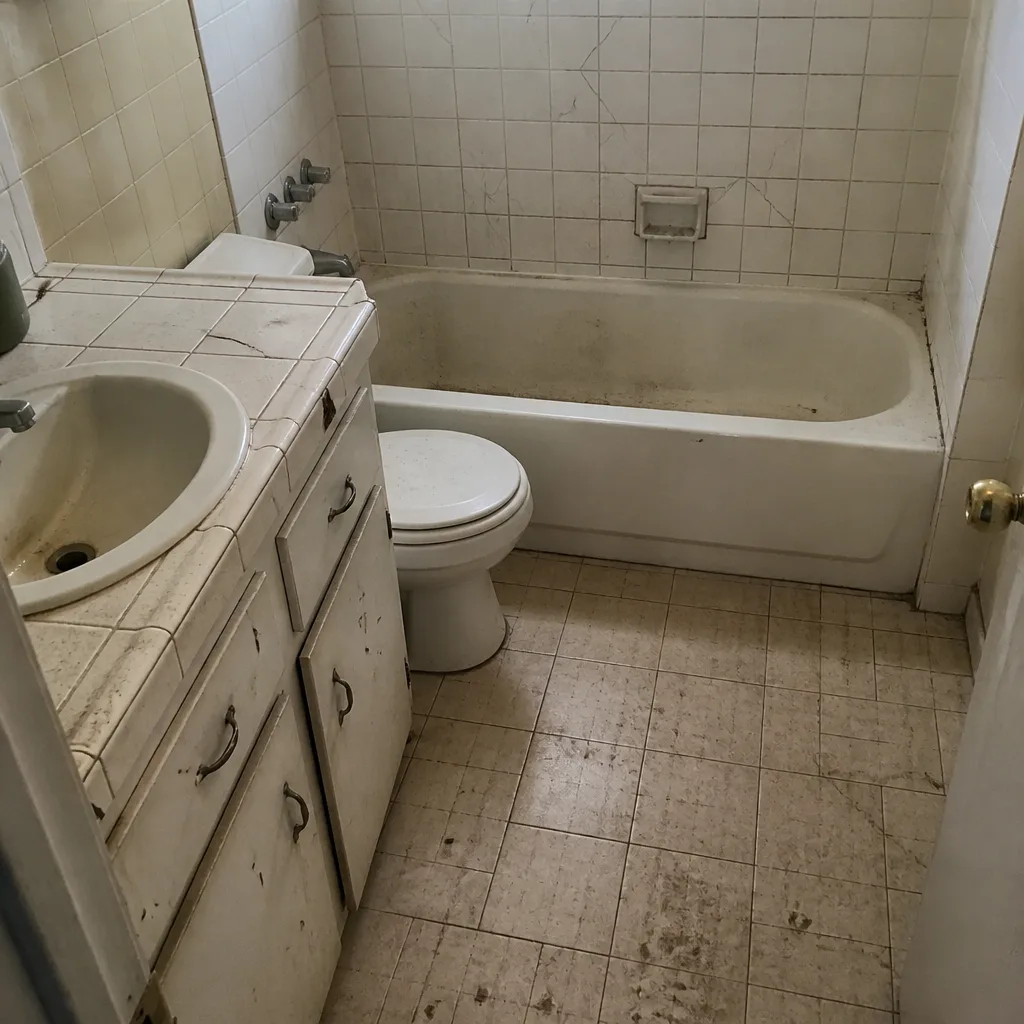 Before
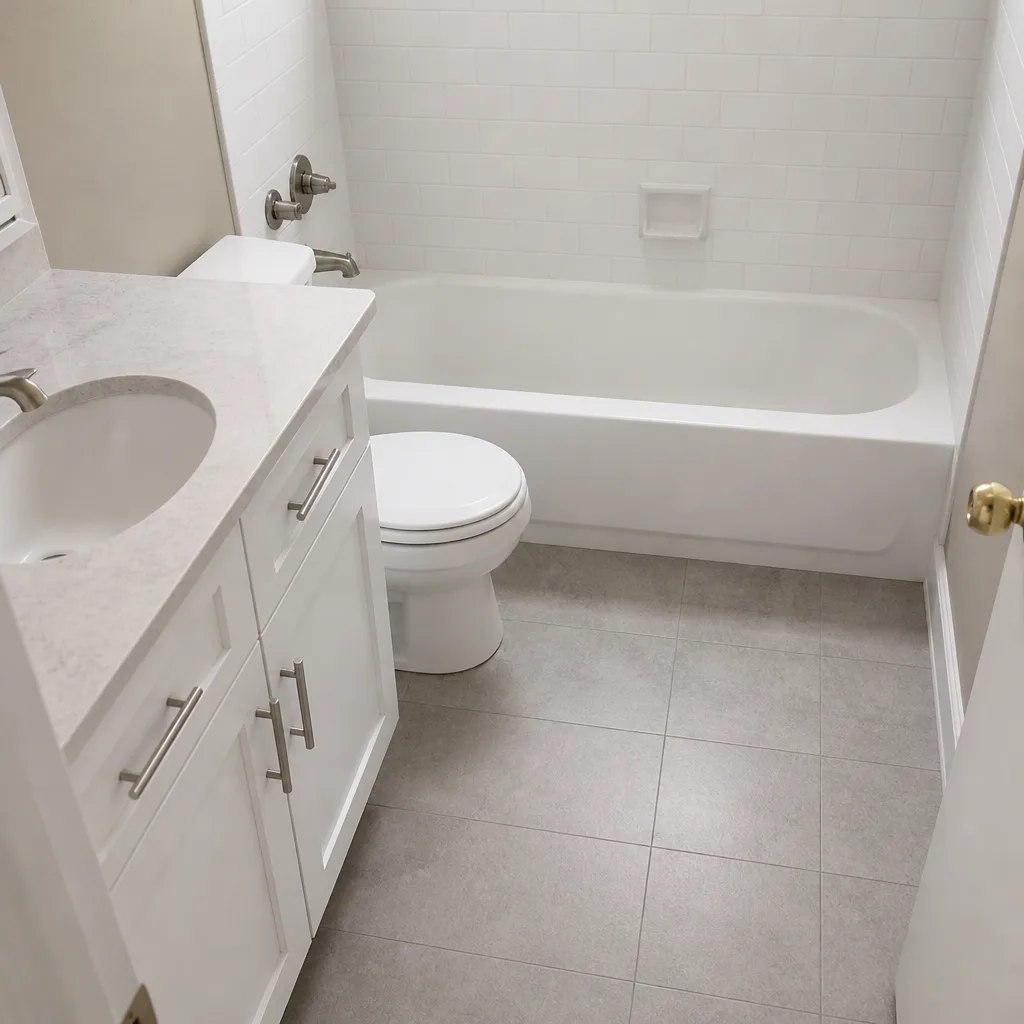 After
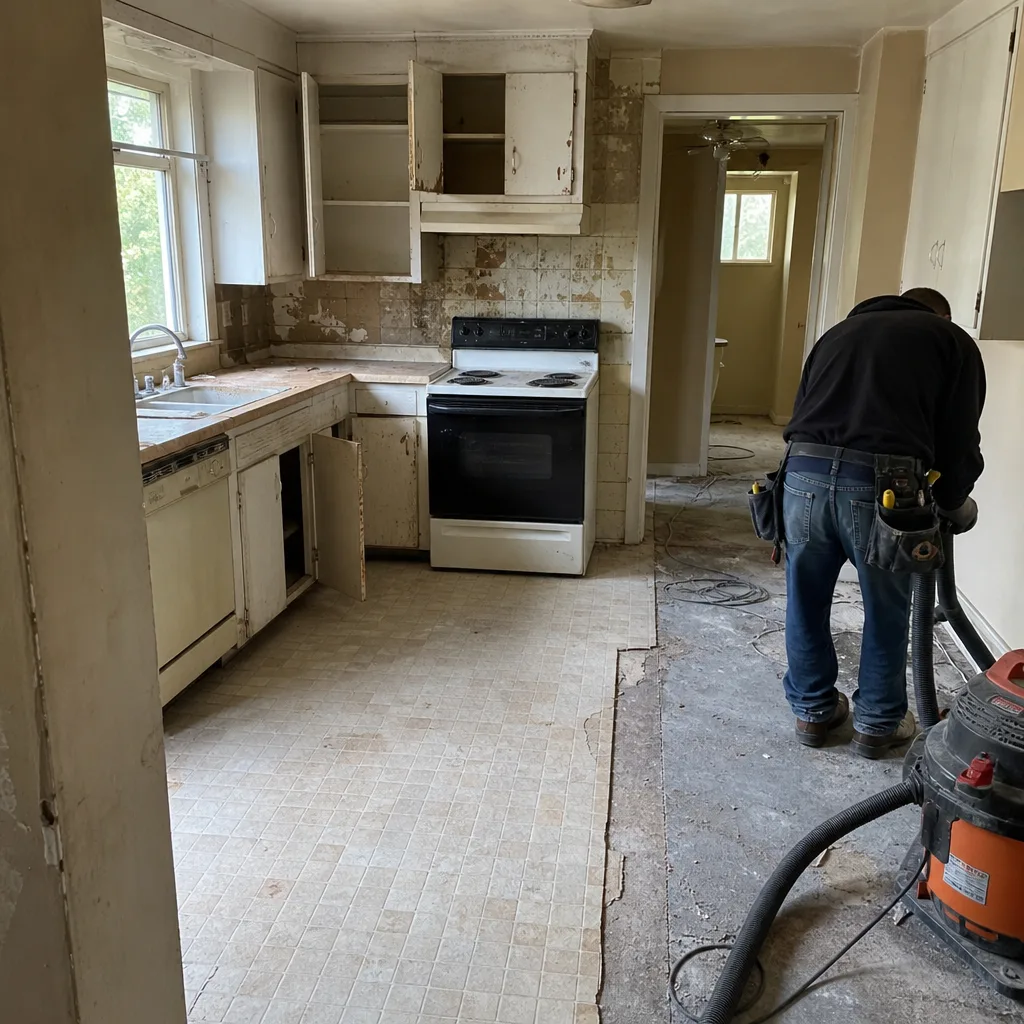 Before
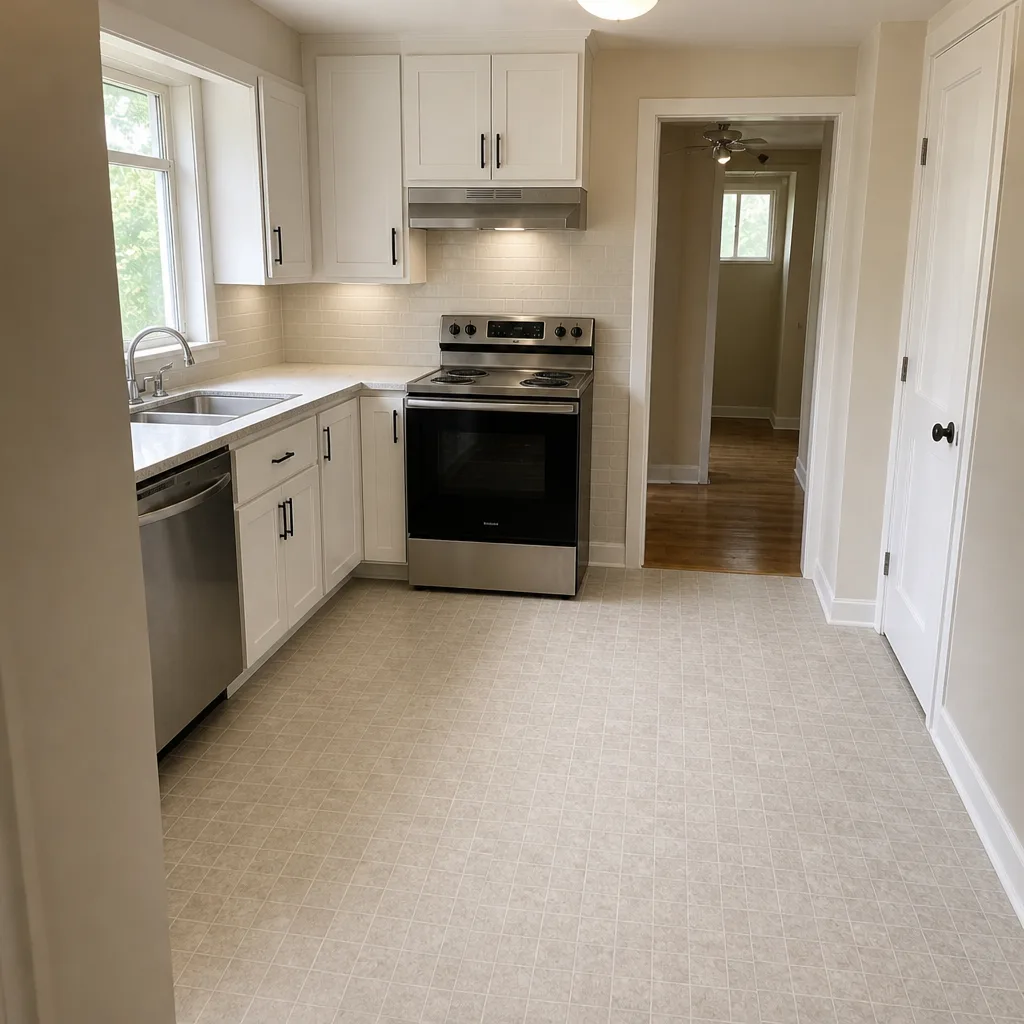 After
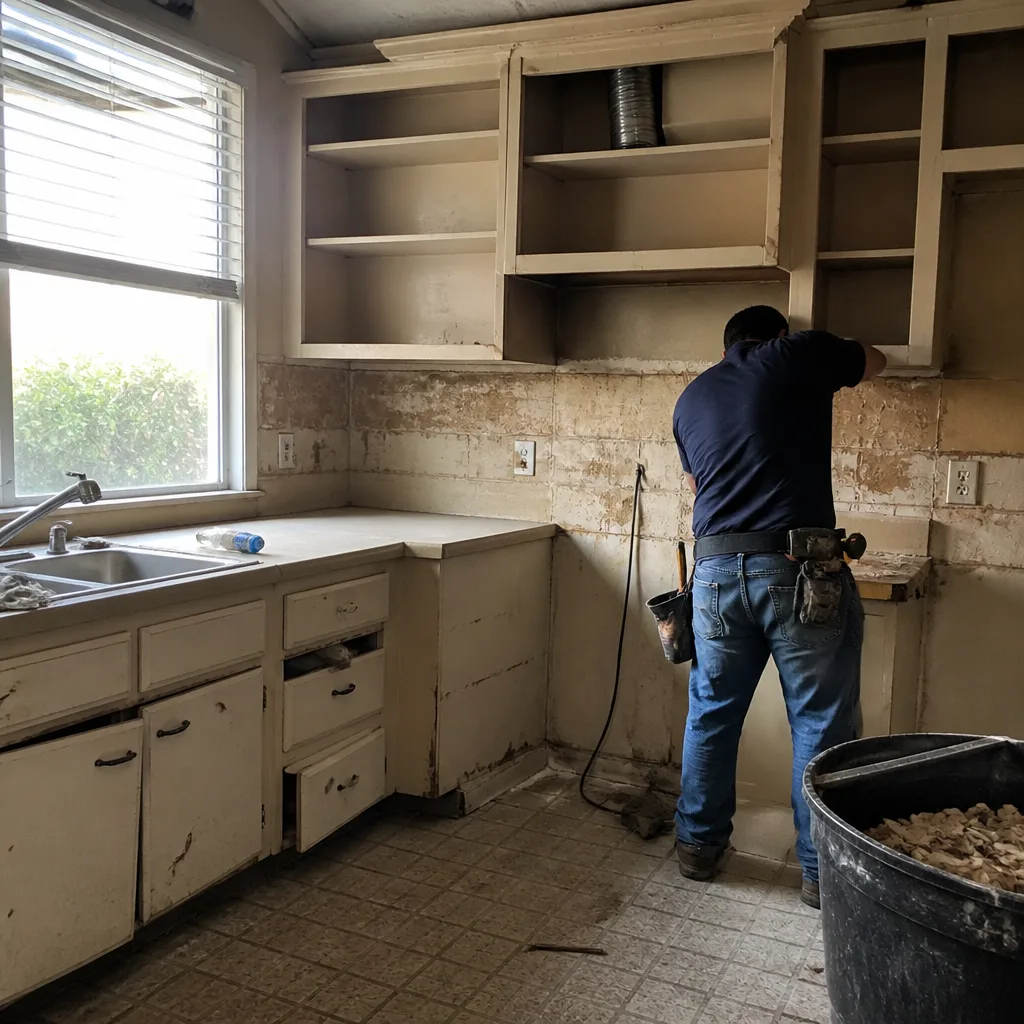 Before
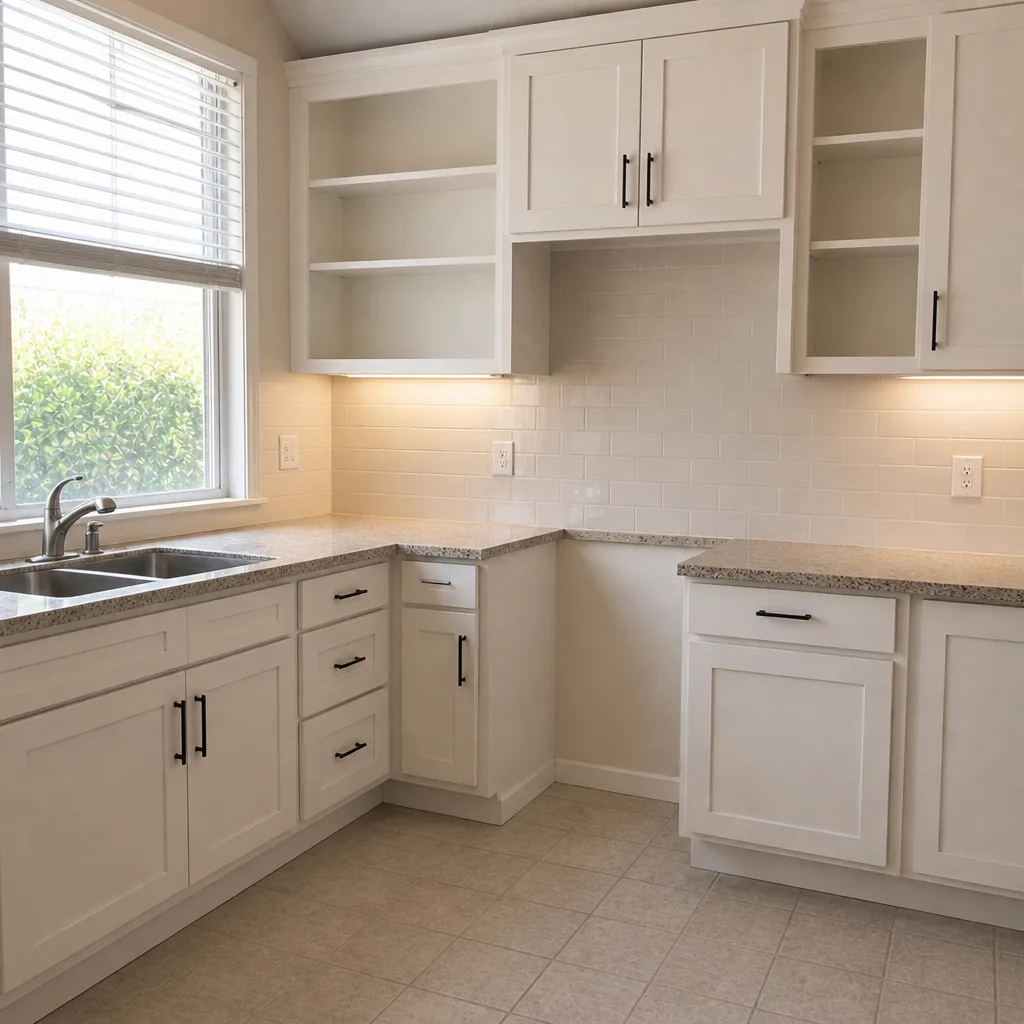 After
When to Call a Professional
Call us if a defect is moving, if a surface has failed and you can’t identify the cause, or if a contractor has declined to correct a workmanship problem and you need an independent assessment of what you’re looking at. Call us if you’re planning a remodel in Folsom and want the scope specified correctly in the first place, so the problems in this guide never get baked in. Call if a floor is gapping, a tile is rocking, a cabinet door won’t stay closed, or a painted surface is peeling and you need to know whether it’s labor or material. Remodeling Folsom offers free estimates in Folsom. Our technicians have up to 11 years of experience working on finish problems across kitchens, baths, floors, and painted surfaces. Call (279) 321-0076.
Frequently Asked Questions

Cracking along grout lines is almost always a substrate movement problem, not a grout failure. The floor underneath is deflecting or the slab wasn’t flat enough before setting, and the grout is absorbing the movement. Regrouting is a cosmetic fix. The real repair corrects the substrate. Call (279) 321-0076 for an assessment before you spend money on a cosmetic fix.
In California, a licensed contractor is required to correct defects in workmanship that appear after completion, and the Contractors State License Board is the escalation path if they don’t. The scope of what’s covered is defined by the written estimate and contract, so keep both. Give notice in writing, with dated photos. Call (279) 321-0076 for a free estimate if you need a second opinion on what the defect is.
Long enough to reach equilibrium with the room’s normal moisture content, which is usually several days and is measured with a meter, not guessed. In Folsom’s dry summers the material has to be brought into a conditioned house and checked until it stabilizes to the product’s specification. Ask your contractor for the acclimation plan and the moisture reading before the material goes down. Call (279) 321-0076 to talk through a flooring scope.
It depends on where the failure started. If the material itself failed, the manufacturer’s warranty applies. If the failure is at a seam, joint, or substrate the installer built, it’s a labor defect and the contractor’s correction obligation applies. Trace the failure backward before you decide which to pursue. Call (279) 321-0076 and we’ll help you read the failure point.
Paint peels from stucco when the film didn’t bond, and that’s a preparation problem. The stucco was either still releasing moisture or still alkaline when it was coated, or the primer was skipped. The repair removes the loose coating, corrects the surface condition, primes properly, and recoats. Call (279) 321-0076 for a free estimate on the exterior scope.
Usually not. On KraftMaid and Wellborn cabinetry, door drift is almost always hinges out of adjustment or boxes installed slightly out of plumb. Most cases correct with a screwdriver and a level. If the whole run has drifted and adjustment won’t hold, that points to installation and is worth raising with the contractor. Call (279) 321-0076 if you want us to take a look.
You’ll get cleaner results from one scope. Cabinetry, countertops, flooring, and paint share seams, and splitting them across contractors splits accountability for those seams. Remodeling Folsom covers the kitchen remodeling and bathroom remodeling work plus flooring and interior and exterior painting under one relationship, which keeps the specification coherent. Call (279) 321-0076 for a free estimate that lays out the whole scope.
The Bottom Line
The problems covered in this guide are specification failures more often than construction failures, and that’s good news for homeowners. Specification failures follow patterns, and patterns can be diagnosed. Check the substrate before blaming the finish. Give wood and plank the acclimation window it needs in Folsom’s dry summers. Prime stucco properly before coating it. Document what’s happening with dated photos and a written description before any conversation. And know the difference between a material warranty and a labor obligation, because the failure point tells you which one applies. When you need help naming the problem or getting the scope specified correctly the first time, we’re here.
Call (279) 321-0076 for a free estimate. Estimates are free, and the written line-item quote sets the price before any work begins. We answer 24/7. Fast dispatch from 7am to 7pm, Sunday through Friday. Visit Remodeling Folsom to see the full scope of what we take on.
Written by the team at Remodeling Folsom.