
Home Remodeling: Repair or Replace? How Folsom Homeowners Decide
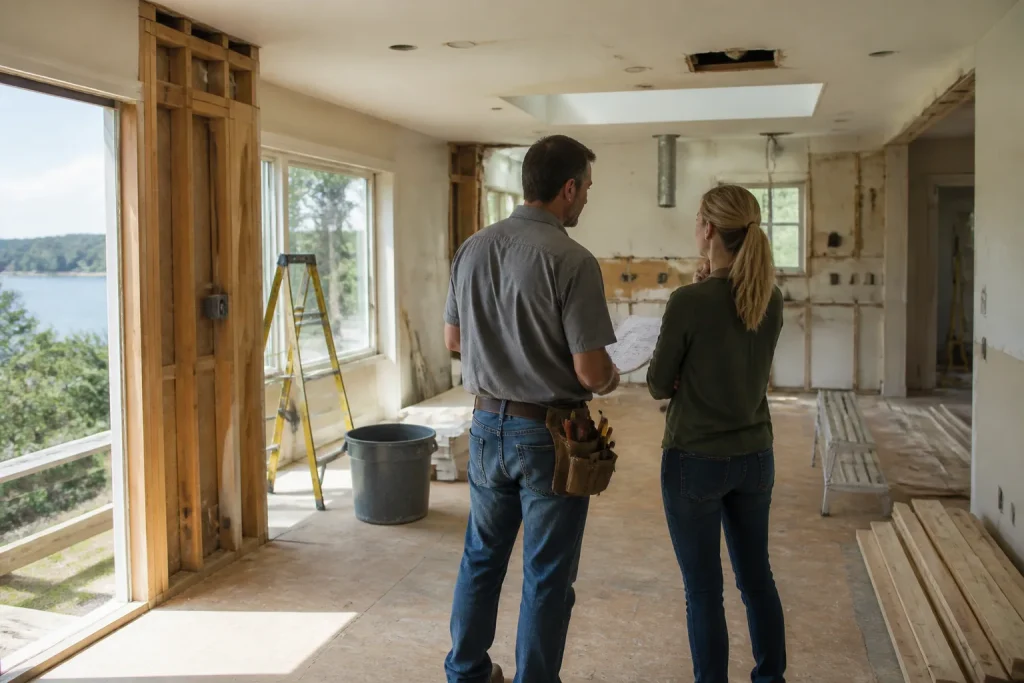
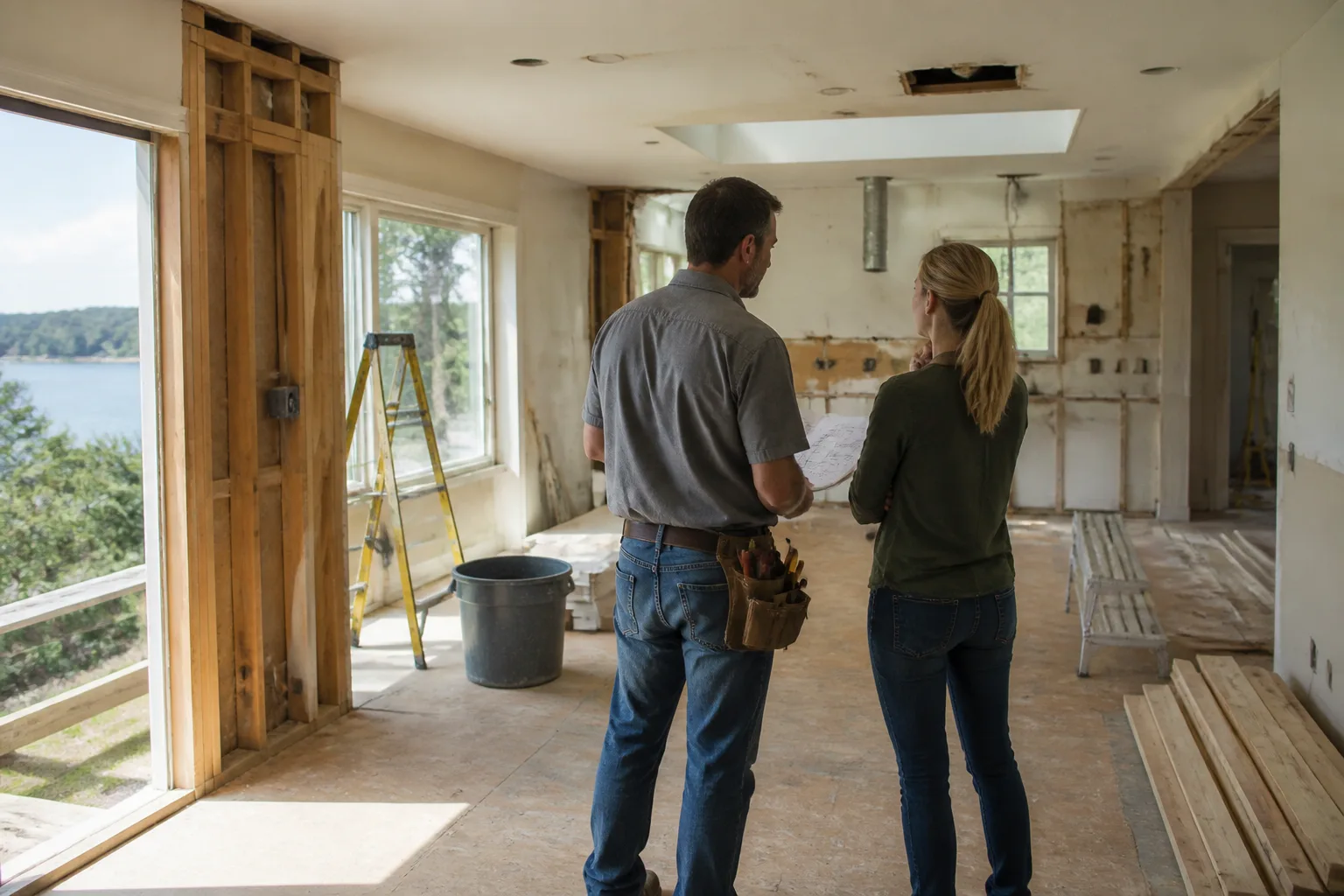
The question sounds like it should be about age. It usually isn’t. Most Folsom homeowners we talk to are deciding whether the thing they already have can carry the standard they’re building toward, and often it can’t. Keeping your original oak hardwood to save a few thousand dollars feels prudent until the new kitchen cabinetry, island, and lighting you’ve chosen sit against 1990s-stain oak the way a new sofa sits against carpet nobody has touched since the Clinton administration. The floor isn’t worn out. It’s mismatched, and that’s a different problem with a different answer.
If you’d rather have someone look at the actual conditions in your house than sort through it alone, call (279) 321-0076.
What decides repair versus replace: age or compatibility?
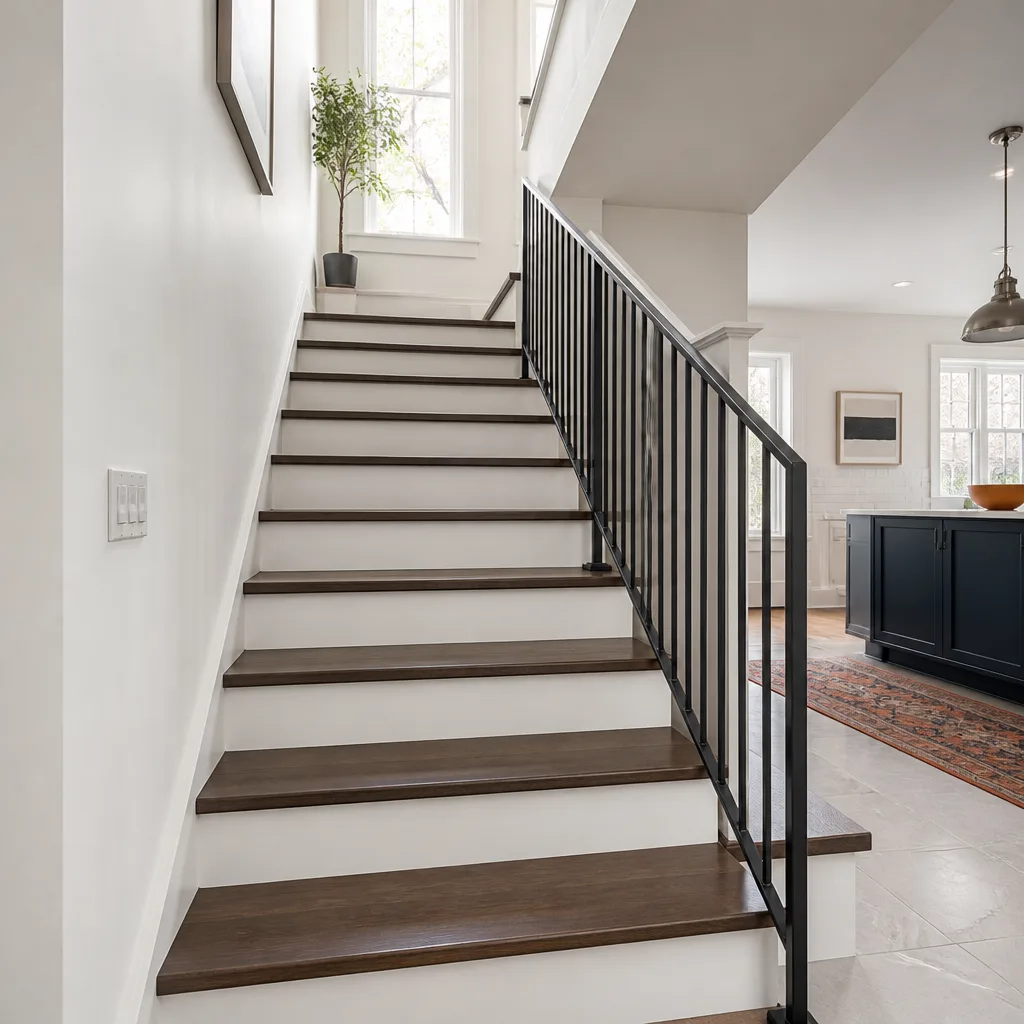
Compatibility decides it, not age. A twenty-year-old material that still matches everything around it and performs to your standard stays. A twelve-year-old material that can’t be matched, can’t be brought up to the finish level you’re installing next to it, or will look like a patch inside a new room gets replaced. Folsom homeowners who make the call on age alone tend to spend twice: once to repair, then again a year later when the repaired surface is the one thing dragging down the room.
We ask three questions before anything else:
- Can it be matched? If we can’t source the same tile, plank width, sheen, and dye lot, a partial repair shows. That’s the whole decision for most partial work.
- Does it meet the standard you’re building toward? Flat-paint oak under KraftMaid cabinetry and a Cambria countertop reads as unfinished, not thrifty.
- What’s the real cost of keeping it? Labor to demo and reinstall around a retained surface, matching searches, and the visual tax of mixed finishes all count toward the repair column.
Answer those honestly and most projects sort themselves. Where they don’t, the material-by-material breakdown below usually settles it.
A repair-or-replace decision matrix for common Folsom remodel elements
Each material tips toward replacement under its own specific conditions. Here’s how we sort them in the field.
Hardwood floors. Replace when the existing floor is a narrow-strip 1990s oak stained a tone that fights your new palette, when wear has thinned the surface past a safe sand-and-refinish, or when the new layout moves walls and the patch seams will never disappear. Repair and refinish when the species, plank width, and grade match what you’re adding and the finish can be brought to the same sheen. Hardwood and flooring work done as part of a home remodeling scope gets spec’d alongside cabinetry and paint, which is the only way the tones line up.
Tile. Replace when the tile is discontinued, when the layout is off-center or sized for an old fixture footprint, or when the substrate under it is failing. Repair when a handful of pieces can be lifted and matched from leftover stock you still have in the garage. In our experience, leftover attic stock is rarer than homeowners expect.
Cabinetry. Replace doors and boxes together when the box construction is particleboard with stapled joints, when the layout wastes the room, or when you want inset or full-overlay lines. Refacing works when the boxes are solid and only the faces are dated.
Countertops. Replace when you’re changing the sink or cooktop footprint, when the existing surface is laminate you’ve outgrown, or when the edge profile can’t be reproduced. Repair when a chip or seam is the only issue and the material is still available.
Windows. Replace when the frame is failing or the glazing has lost its seal. Repair when hardware and weatherstripping are the only problems.
How do you calculate the true cost of a repair?

Add three numbers most homeowners leave out. The first is straightforward: labor, plus the material for the patch. The second is the cost of finding a match, which can mean calling suppliers across the region and still coming up empty. The third is what we call the visual coherence penalty: the dollar value of a room that’s finished except for one surface that doesn’t belong.
A quick way to run it:
- Price the patch or refinish as a standalone job, labor and material.
- Add the match search: hours spent, and the premium for sourcing discontinued stock if it exists.
- Add the cost of replacing the repaired area later if it still looks off, since that’s the likely second step.
- Compare that total against a full replacement done once, inside the same scope.
That last line is where the honest answer usually lives. The number rarely comes out in favor of repairing a surface that already clashes with what’s going next to it. If repairs are all your budget allows this year, that’s a real answer too, and we’ll tell you which repairs hold up and which ones you’ll be undoing later.
Why is matching old tile and hardwood so hard in Broadstone and Willow Creek?
Because the product lines are gone. In Folsom’s Broadstone and Willow Creek neighborhoods, much of the original tile, hardwood, and cabinetry came from runs that manufacturers have since discontinued. Dye lots shift, plank widths get retired, and the trim profile on a cabinet door from a 1990s build often has no current equivalent. Even a perfect color match in a photograph won’t match under your room’s actual light.
What that means for partial repair strategies:
- Plan for visible seams. If a patch will show, decide up front whether you can live with it.
- Consider a deliberate break. A transition strip, a change in tile pattern at a doorway, or a border can turn a mismatch into a design line instead of an accident.
- Weight replacement higher. In older Broadstone and Willow Creek homes, the match problem alone often pushes a repair into replace territory.
It’s one of the few places where an older house is harder to work with than a newer one, and it’s worth knowing before demo day.
Which partial replacements actually pay off at resale in Folsom?
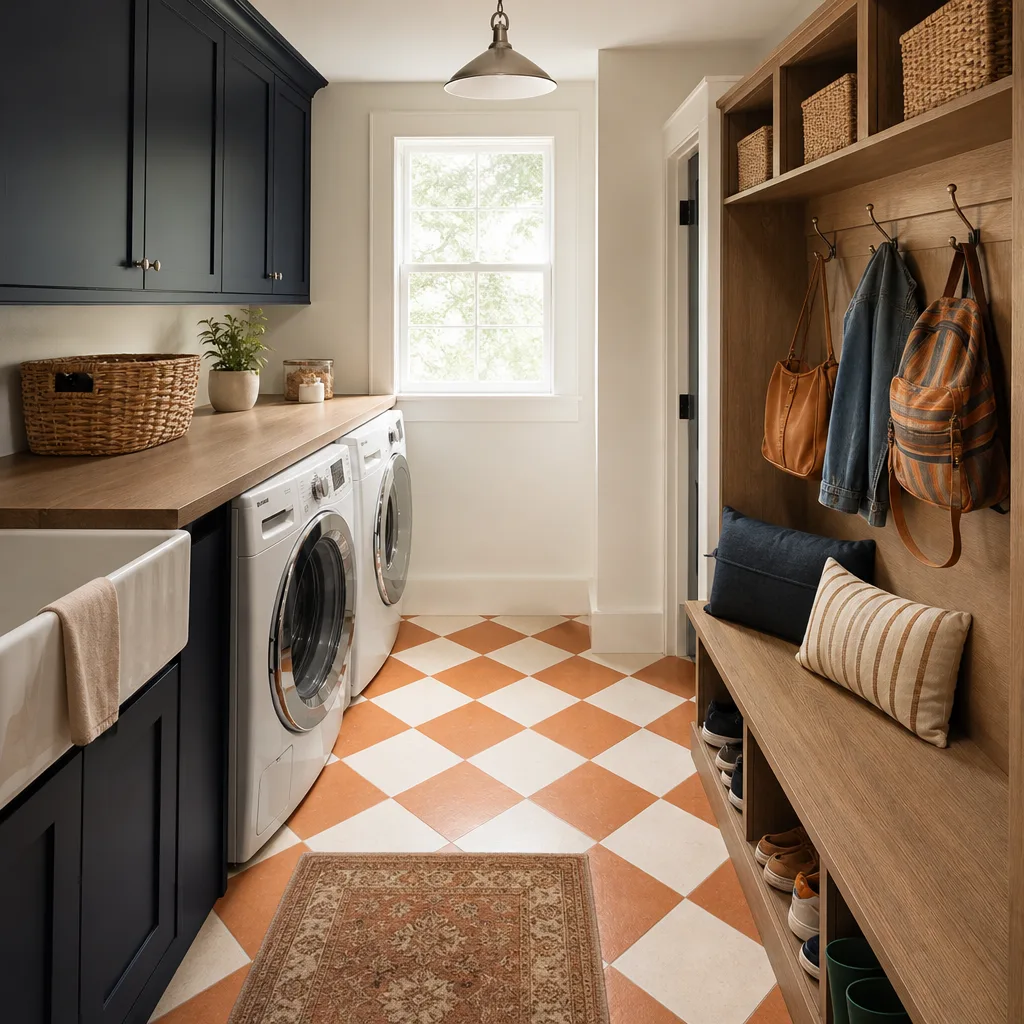
Folsom buyers register completed rooms and discount half-measures. In walkthroughs, a kitchen with new cabinetry and a countertop that clearly doesn’t match reads as a project left unfinished, and buyers price it that way. The replacements that actually move the needle are the ones that make a room feel whole: a full kitchen or bath scope, flooring that runs uninterrupted through connected spaces, and a fresh paint job that ties the palette together.
The ones that get discounted:
- New cabinet fronts on failing boxes, which inspectors and buyers both notice.
- A countertop swap that leaves the old backsplash and the old sink in place.
- New tile in half a bathroom with a visible seam at the shower wall.
- Fresh paint over failing exterior trim, which reads as a cover-up rather than a refresh.
The pattern is consistent. Buyers aren’t grading individual line items. They’re deciding whether the room feels finished, and a mixed-finish room doesn’t.
When does a designer-grade replacement make the decision obvious?
It’s often obvious the moment the alternative gets named. Compare repolishing existing laminate against a Dekton countertop, or refinishing dated oak against KraftMaid cabinetry with a Cambria quartz surface above it. The repolish math looks cheaper on paper until you count the labor, the downtime, and the second replacement you’ll be doing sooner than you’d like. The replacement option carries a manufacturer warranty of its own, which adds a layer of product accountability beyond the workmanship, and it sets a standard the rest of the room can be built to.
This is where our approach differs. We come with a curated lineup rather than a binder of generic samples:
- Cabinetry: KraftMaid and Wellborn.
- Surfaces: Cambria, Silestone, and Caesarstone.
- Fixtures and faucets: Kohler, Grohe, Toto, Moen, Delta, Blanco, and American Standard.
- Exterior: James Hardie-compatible installation knowledge for cladding and trim.
Specified by name, installed by us. When the upgrade is that clear, the repair-versus-replace decision stops being a debate. If you’re weighing a kitchen remodeling or bathroom remodeling project, seeing the actual materials side by side usually settles it in an afternoon. One contractor, every finish, from cabinetry and countertops down to flooring and paint, all coordinated under a single relationship. That also eliminates the scheduling gaps that open up when you hire separate specialists for each finish.
When should you call a pro?
Call us when the repair and replace options are close enough that you’d like a second set of eyes, or when you’re ready to price the whole scope. Some work around wiring and gas lines inside a remodel isn’t a DIY job, and we’ll say so plainly and pull in the right licensed professional. Our technicians have up to 11 years of experience with this kind of decision and know which repairs hold in Folsom’s housing stock and which ones won’t.
Related services in Folsom: Remodeling Folsom covers the full scope, including kitchen and bathroom remodeling, flooring installation, and interior and exterior painting. Free estimates, written line-item quotes, a fixed price with no change orders, permits pulled, inspections passed, and a workmanship warranty on our side of the work.
The Bottom Line
Repair or replace isn’t about how old the material is. It’s about whether what’s there can carry the standard you’re building toward. Repair when the material matches, the substrate is sound, and it meets your finish level. Replace when it can’t be matched, when blending old and new will cost more than doing it once, or when the replacement material makes the room feel finished instead of patched. In our experience, Folsom homeowners regret the half-repair far more often than the full replacement. If you’re in Folsom and want help deciding, Remodeling Folsom offers free estimates. Call (279) 321-0076. We answer 24/7. Fast dispatch from 7am to 7pm, Sunday through Friday.
Frequently Asked Questions
Replacing is often cheaper over the long run when your existing boxes are particleboard or the layout wastes the room, because refacing keeps a failing box and a dated footprint. Repair or reface only makes sense when the boxes are solid and the faces are the only issue. Call (279) 321-0076 for an exact quote. Estimates are free.
Usually not fully. Much of the original tile and hardwood in Broadstone and Willow Creek came from discontinued runs, and dye lots and profiles shift. A partial repair typically shows a seam unless you plan a deliberate transition. Call (279) 321-0076 to walk through your options. Estimates are free.
It can. Folsom buyers discount rooms that read as unfinished, and a visible floor patch inside an otherwise new room is exactly what they flag. A completed, continuous floor usually registers better than a partial repair. Call (279) 321-0076 to price both paths before you decide. Estimates are free.
It depends on scope. A single-surface replacement runs shorter than a full kitchen or bath, and a whole-home transformation runs longer than both. We give a timeline in the written estimate so you know what to plan for before work starts. Call (279) 321-0076 to schedule your free estimate.
Written by the team at Remodeling Folsom.
Need Construction Help?
Call Remodeling Folsom - the local pro we connect you with is licensed and insured, here with fast help in Folsom.
(279) 321-0076